



































Which Site Made This Printed Yoga Mat?
Identify the material and the sites behind a proposed printed yoga mat, then link the print, cutting and packing records to that construction.
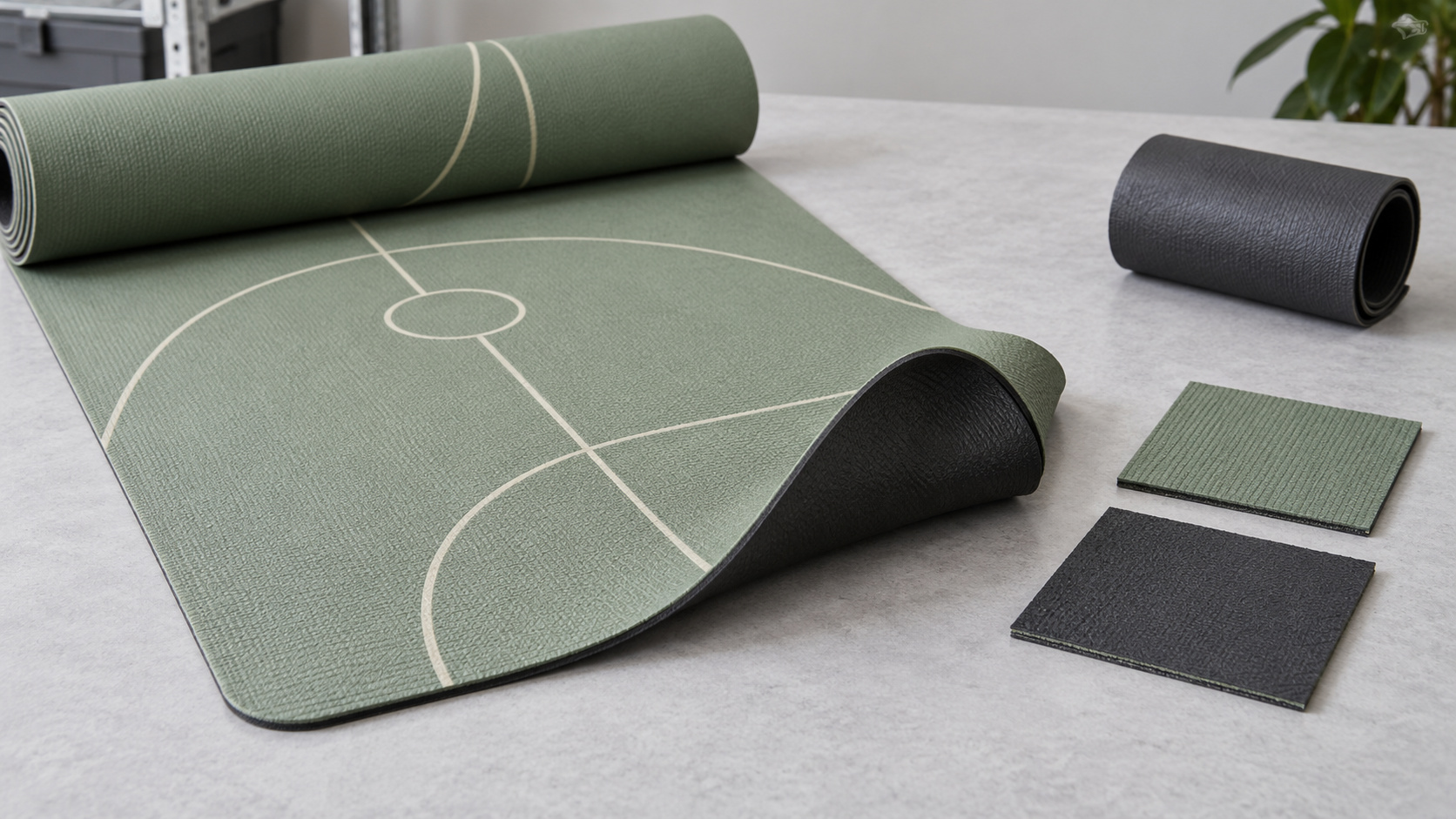
I would begin an enquiry about a printed yoga mat with two views of the proposed sample: the printed face and a detail of its construction supplied by the manufacturer. I would ask the supplier to name the material in that sample, including a separate face layer if there was one. Beside those pictures I would leave space for the sites doing the work. That would give us a way to discuss this mat, even if the same artwork was being offered on several different constructions.
A manufacturer's own description can provide a useful place to begin an enquiry. Ningbo Dongsheng Rubber Products, for example, describes continuous rubber-foaming production and lists yoga mats among its products on its website. I would treat that as a published lead about that business and ask for the site and process proposed for the actual model in the quotation. It would not tell me the construction of a different supplier's mat. Nor would I attach a yoga-mat production claim to a town merely because a regional directory listed outdoor equipment there.
For the base material, I would ask whether the supplier made the sheet used for the order or obtained it from another operation. The answer would go beside the material reference on the route. If the sheet was bought in, I would ask how its source and batch were recorded when it arrived for further work. I would want a returned enquiry to name the proposed material, rather than only describe the finished mat as soft or thick. Those descriptions could stay in the sample notes, while the material identity had its own entry.
For the printing step, I would put the artwork reference beside the site proposed to carry it out. If the offered mat had an added face layer, I would give that material its own entry and ask who supplied and applied it. The supplier could mark the relevant part of the construction picture when replying. I would keep an alternative face or base proposal under another reference, with the returned sample identified against it. That would let me compare the offered constructions while keeping the selected artwork attached to each one.
I would send the cutting site a sample photograph with the intended corners marked on it, asking them to show the corresponding cut position on the artwork. For a repeating pattern, I would want to see which repeat was proposed for each finished piece. I would ask how the cutting record identified the material and print job used, and keep the answer beside the marked photograph. For a version with a specified reverse side, I would keep a reverse-side photograph under the same sample reference. The retained sample would then have enough information attached to discuss both its appearance and the material route that was proposed for it.
A question about the base sheet would take me back to the material operation named in the reply. A question about the position of the printed motif would go with the artwork and cutting references. I would keep the contacts for those operations alongside the proposed route, including any work done by a partner. If I arranged a visit, I could ask what was available to observe at the relevant site for this model. Product performance, material testing and any intended claims would still need their own agreed assessment, using the construction and sample references collected in the enquiry.
Share the product, specifications, quantity and destination to discuss sourcing options.