


































Choose the Router Mode Before Writing the Feature List
Compare the offered router in the operating mode the customer will use, with the exact hardware version and supplied firmware recorded.
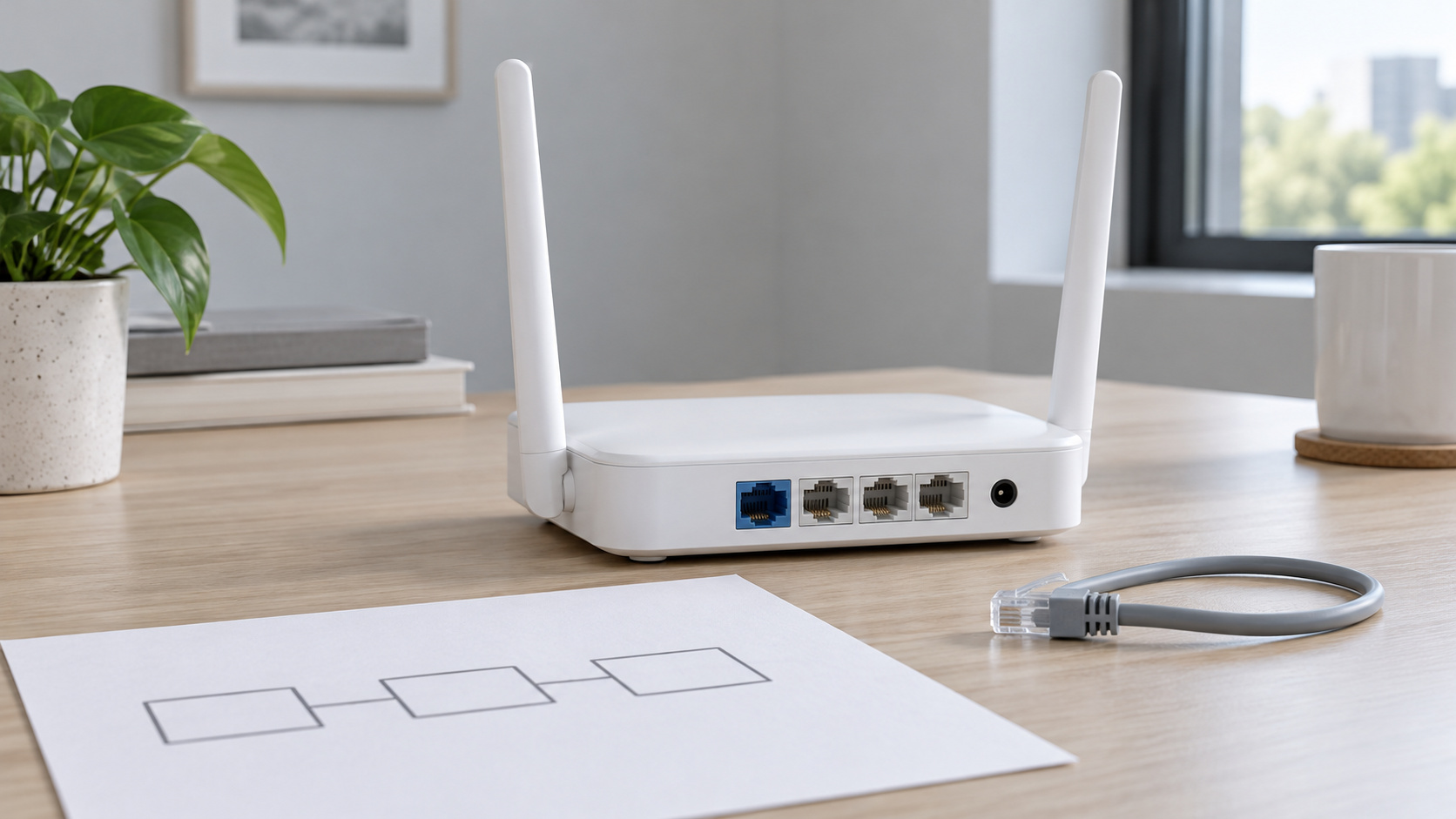
For a router enquiry, I would put a small network sketch above the product comparison. Is the new unit intended to be the main router, or to provide Wi-Fi behind an existing router? The answer belongs beside the requested operating mode. Two similar-looking boxes can be offered for different roles, and a reseller needs to know which role the proposed description is promising before selecting the item.
On the demonstration record, I would leave three fields for the supplier: model, hardware revision and installed firmware. I would keep its answers on the same page as the proposed mode. A feature shown for a different hardware version would remain an open question. A manual page reference would help, or a returned settings view from the sample. I would ask for private network details to be removed from that view. Without the version record, I would still be comparing a product-family description with a sample whose configuration was unspecified.
The feature columns would follow that configuration. For a buyer interested in guest access, traffic controls or a VPN function, I would ask which requested features work in the selected mode on the offered version. TP-Link's router-versus-access-point FAQ describes mode-dependent limitations in its products. I would use that as a reason to ask the question, rather than copy its answer onto another supplier's router. A feature mentioned elsewhere in a catalogue does not settle its availability in this particular offer.
For the wired side, I would ask for a rear-panel view and a port table returned by the supplier. Each physical port would be identified, with its stated connection rate and its role in the proposed mode. If a port changes role with the mode, that difference would go in the reply. A headline wireless-rate description would stay separate from the port specifications. I would not turn either figure into a promise about the customer's internet speed; that would leave the actual connection and use conditions unexplained.
The retail package would have a separate line for the power supply, cable and instructions that are actually included. For the reseller's requested language, I would leave separate answer spaces under interface and printed guide. The supplier could identify the screen and document versions in those spaces. An English demonstration screen would not answer that for another language. For an app-dependent function, I would ask the supplier to name the required account or service in its reply. The local-interface option would need an answer alongside it. If a recurring fee applies, that would go into the comparison before the reseller prices the offer.
I would put the draft sales page beside the sample record and check the mode named in each. Any unconfirmed feature would stay out of the sales promise while the question was returned to the supplier. A sample assessment could then use the agreed network role and requested functions, with conditions and results documented separately. A later version change would send me back to the accepted feature replies. I would ask the supplier which replies still applied and which required another assessment. Support staff could then retrieve the version and mode behind the sales description, rather than begin a setup enquiry with only the name printed on the box.
Share the product, specifications, quantity and destination to discuss sourcing options.