



































Easter Hanging Ornaments: Check the Mix Inside Each Set
Inspect the specified colour and design mix inside the retail set, alongside the condition of the individual ornaments and their packing.
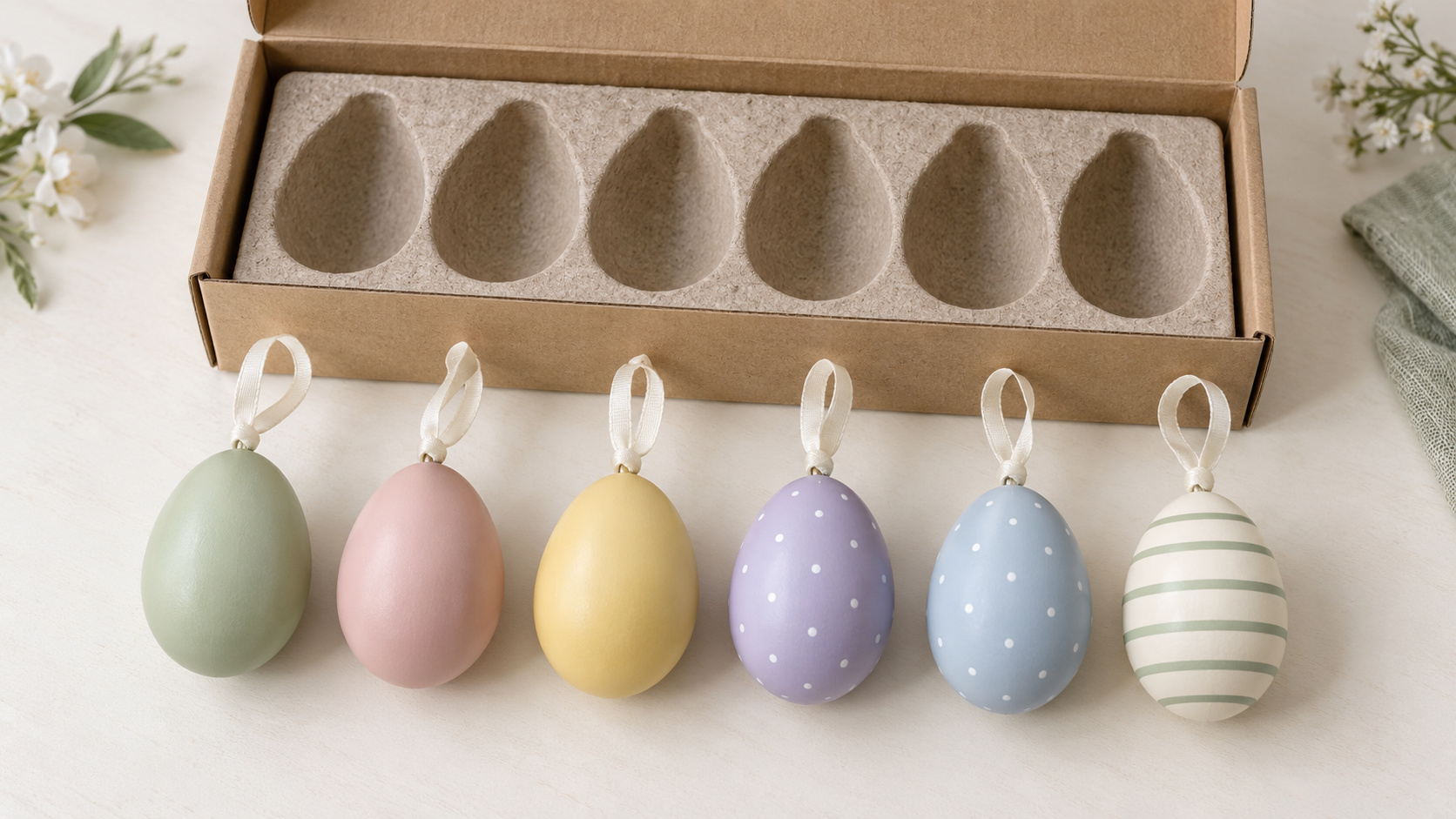
Before sending a hanging-Easter-egg set for inspection, I would label an approved sample of each design and put their photographs on one sheet. Beside each photograph I would write the number required in the retail pack. A plain sage egg and a sage egg with dots would keep different references. If mixed assortments were permitted, I would put the permitted choices on the same sheet. The inspector could then compare an opened pack with the intended mixture without having to make a colour choice on the buyer's behalf.
I would ask for one view of each sampled pack as it was opened, followed by a view of its contents arranged against those references. The report would have a place for the quantity of each design, not just the quantity in the box. If an extra dotted egg appeared where a striped one should have been, I would want to see that combination in the photographs before the contents were moved between packs. I would keep the retail-pack and carton references with the result, so the supplier could review the particular assortment that had been found.
For an enquiry specifying painted hollow eggs, I would concentrate the individual-piece photographs on the painted faces, the moulded join and the top attachment area. I would ask the supplier to show any intended seam on the approval sample. That would give the inspector a reference when recording a line found on the delivered piece. A print displaced from its agreed position, a visible surface chip or excess material at a join would be photographed with the design code. I would ask for enough surrounding detail to locate the finding on the egg, as well as a close-up of it.
For the hanging loop, I would ask for a picture taken close enough to show where the cord entered or joined the egg. I would have the supplier mark the measuring points for its specified length on the approval picture. If the joint continued inside the hollow body, I would request a construction detail for the assessor to use when planning any attachment test. I would keep a photograph confirming the loop was present, and any strength-test result, as separate items under the same design reference. The test method and acceptance conditions would come from the agreed specialist assessment, rather than a pull force chosen from how the cord looked.
I would want two packing photographs before closure: one of the empty insert and another with the ornaments in their agreed places. I could use those pictures to compare the separators and the spaces between neighbouring eggs. If an opening photograph showed a damaged piece, I would send the supplier that picture with the close-up, keeping the pack reference on both. I would ask them to look at the piece's position in the insert when reviewing the finding, and retain their reply with the photographs.
I would agree the sampling plan and the checks for the specified product before the inspector opened the cartons. Any material or safety assessment required for the design and destination would have its own appropriate evidence; a design count would remain a design count. I would retain the actual per-design quantities and individual observations in the final report, including the photographs, so that the overall decision could be read alongside the results on which it was based.
Share the product, specifications, quantity and destination to discuss sourcing options.